
Growing Vegetables in Pots: Small Space Ideas for Patios & More
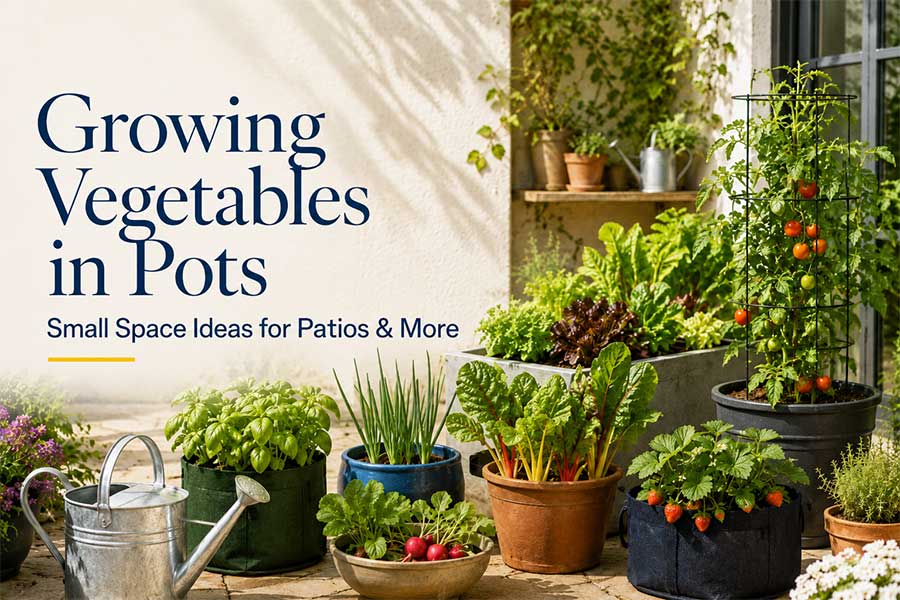
Think you need a large garden or allotment to grow your own food? Think again. Growing vegetables in pots is one of the easiest ways to enjoy homegrown produce, even if you only have a patio, balcony or sunny doorstep.
Many popular crops thrive in containers, making it possible to grow fresh vegetables in small spaces. From salad leaves and herbs to tomatoes, chillies and potatoes, vegetable container growing can transform even the most compact outdoor area into a productive kitchen garden.
Ready to get started? In this guide, we'll outline the best vegetables to grow in pots and share practical container-growing tips to help you make the most of your space, with expert advice from our very own Horticultural Manager, Jacky.
Why grow your own vegetables in pots?
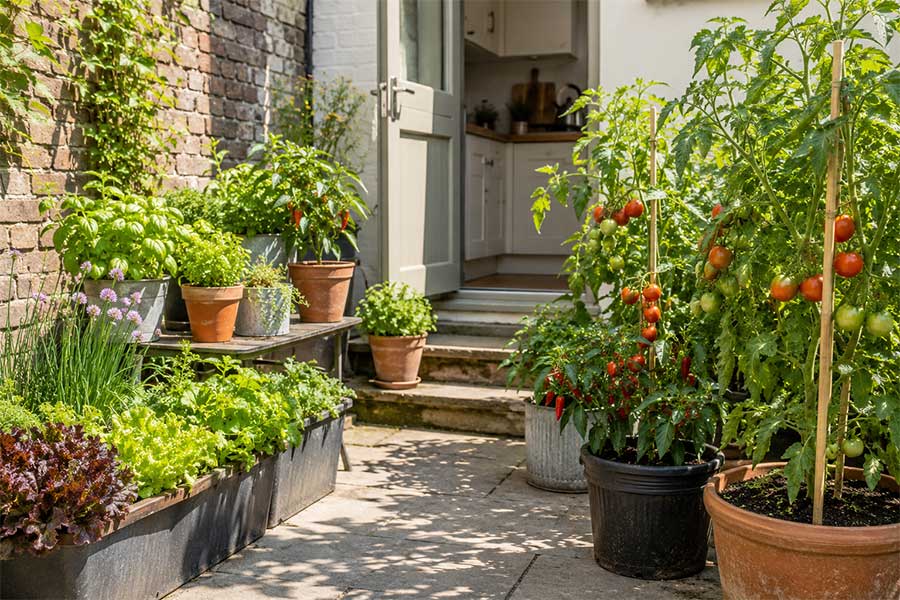
One of the biggest benefits of growing vegetables in pots is freshness. Herbs, salad leaves, tomatoes and strawberries often taste best when picked and eaten straight away. And while growing your own vegetables won't replace a weekly supermarket shop for most gardeners, it can help you get more value from ingredients you use regularly.
Growing your own vegetables and fruit can also encourage healthy eating, help children connect with nature and provide a better understanding of where food comes from. For beginners, crops such as radishes, pea shoots and lettuce are easy to grow in pots. They also deliver results relatively quickly, making them a rewarding place to start.
Better still, growing vegetables in pots offers an affordable, screen-free hobby for people of all ages. All you need are a few containers, quality compost and some seeds or young plants.
Best vegetables to grow in pots
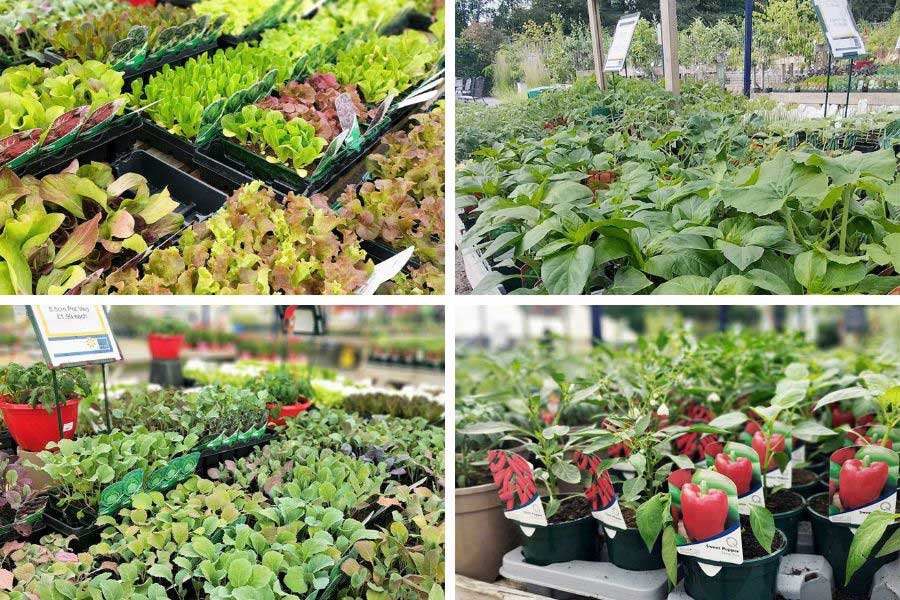
While many vegetables grow happily in pots, some are better suited to life in a container than others. If you're new to growing your own, start with crops that are compact, productive and easy to look after. Below are some of our top picks.
Salad leaves, rocket and spring onions
Salad leaves and rocket are among the easiest vegetables to grow in pots. They grow quickly, take up very little space and can provide multiple harvests throughout the season. Spring onions are another excellent option. They grow well in pots, troughs and window boxes and can be sown regularly for a steady supply throughout the growing season.
Herbs
Herbs are some of the best edible plants for container growing. Basil, parsley, mint, chives and thyme all thrive in pots and can be positioned close to the kitchen or barbecue for everyday use.
Fresh herbs can be expensive to buy regularly, so growing them in pots is an easy way to get more value from a small growing space while adding flavour to home-cooked meals. Fennel is another great option, bringing both flavour and attractive height to container displays.
Tomatoes, chillies and peppers
Cherry tomatoes are a popular choice for pots, particularly on sunny patios and balconies. Dwarf and bush varieties are often the best option, as they take up less space and require less support than larger cordon types.
Chillies and peppers also perform well in containers, provided they have plenty of warmth and sunshine. A sheltered patio, balcony or sunny windowsill can provide ideal growing conditions.
Radishes and pea shoots
If you're looking for quick results, radishes and pea shoots are hard to beat. These easy vegetables to grow are ideal for beginners and can be harvested relatively quickly compared to many other crops. Better yet, pea shoots can be grown in shallow, space-saving containers on a windowsill or patio and are perfect for children's gardening projects.
Peas, beans, chard and carrots
Short on space? Climbing crops such as peas and beans are great for growing vertically. Dwarf varieties make excellent use of supports such as trellis and wigwams and can be surprisingly productive in a relatively small space.
Chard is another great choice, producing colourful leaves that can be harvested throughout the season. Carrots can also thrive in containers – especially compact varieties such as Chantenay, which are happy to grow in shallow pots.
Potatoes
Potatoes are another firm favourite for patios and courtyards. They grow best in dedicated grow bags and require more compost and regular watering than some crops. But they can produce an impressive harvest from a relatively small footprint. Jacky points out that potato grow bags can also be used for French beans, runner beans and other climbing veggies too.
Strawberries
Although technically a fruit, strawberries deserve a place in any edible garden. They thrive in pots, troughs, hanging baskets and vertical planters, making them ideal for compact outdoor spaces. Strawberries are also one of the easiest edible crops for families and beginners, as they're productive, attractive and fun for children to harvest throughout the summer.
What not to grow in small pots
While many vegetables can be grown successfully in containers, some offer a better return for the space they occupy than others. Large vegetables such as cauliflower, winter squash and broccoli take up considerable room for a relatively modest harvest. Where space is limited, productive crops such as herbs, salad leaves, tomatoes, chillies and spring onions are often a more practical choice.
Where is best to grow vegetables in pots?
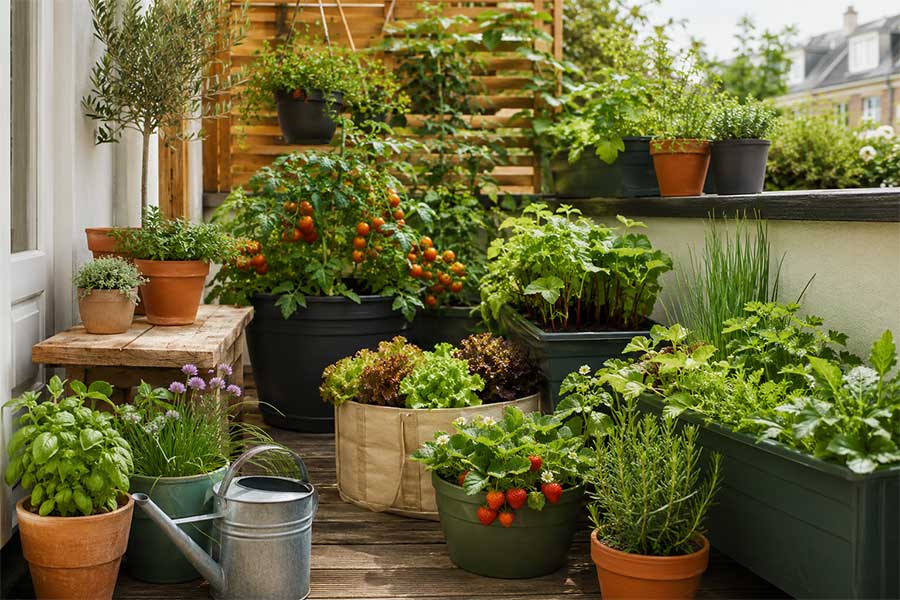
One of the biggest myths about growing your own food is that you need a large garden or allotment. In reality, growing vegetables in pots allows you to make use of almost any outdoor space. Patios, balconies, courtyards, front doorsteps, windowsills and even narrow areas along fences can all become productive growing spaces with the right containers and crops.
What's more, container growing isn't just useful for small gardens. Many gardeners choose to grow vegetables in pots because it allows them to enjoy homegrown produce without setting aside space for a permanent vegetable patch.
The best location will depend on what you want to grow. Sun-loving crops like tomatoes, chillies and peppers need the brightest spot available, while herbs, salad leaves and leafy vegetables can tolerate a little more shade. Before planting, consider how much sunlight different areas receive and position your crops accordingly.
It's also worth thinking about convenience. Keeping herbs close to the kitchen or your barbecue makes them easier to use regularly, while positioning vegetables near a back door or patio can make watering, feeding and harvesting less of a chore. Frequently harvested crops such as salad leaves, spring onions and herbs are particularly useful when placed within easy reach.
Another option: Create a vertical garden
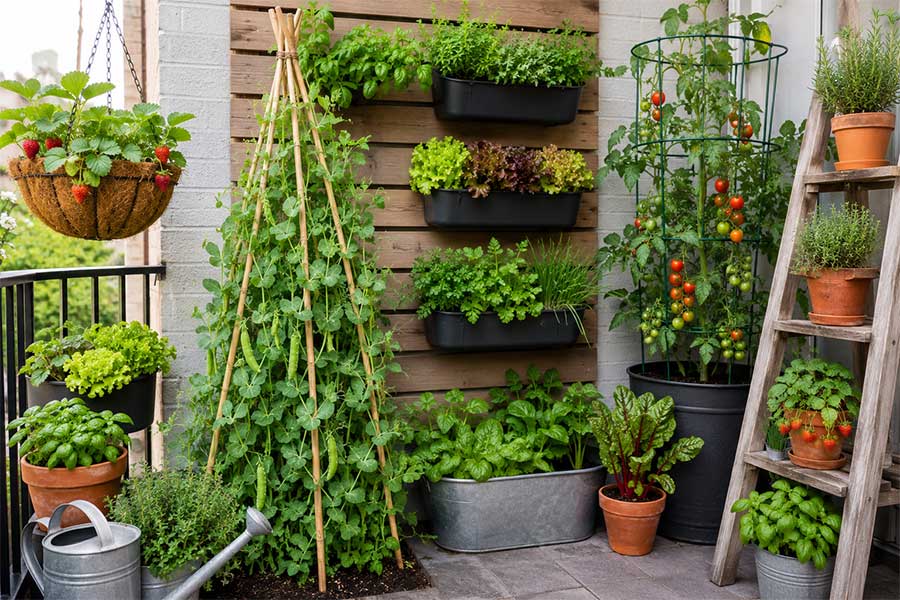
When growing vegetables in small spaces, it pays to think vertically as well as horizontally. Small-space gardening expert Mark Ridsdill Smith suggests gardeners use shelves, ladders and vertical supports to maximise their available space. A vertical vegetable garden can significantly increase the number of crops you can grow without taking up much floor space.
Climbing crops such as peas and beans can be trained up trellises, obelisks and wigwam supports, while tomato cages help keep plants productive and tidy. Wall planters, hanging baskets and tiered shelving are also great for expanding your growing area. Herbs, lettuce and strawberries are ideal for vertical growing, while trailing tomatoes suit hanging baskets.
You could also use an old ladder to hold several pots at different heights, while space-saving planters can help maximise narrow areas alongside walls and fences.
Jacky also highlights that beans don't always need traditional cane supports. They can be trained along balcony railings and other structures to make the most of your space.
Choosing the right pots for your vegetables
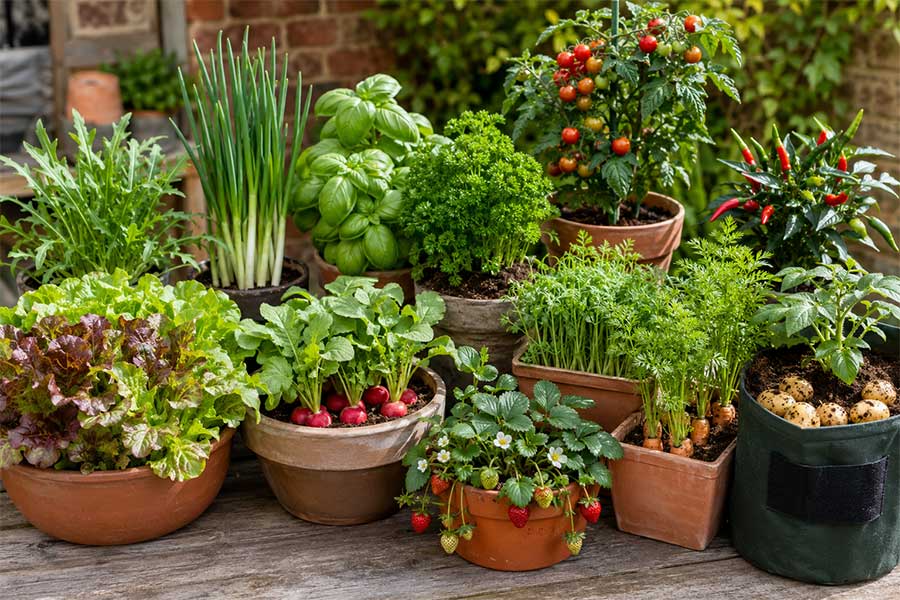
One of the advantages of growing vegetables in pots is the wide range of containers available. Pots, troughs, raised beds and grow bags can all be used successfully, provided they offer adequate drainage. It's also important to match the container to the crop.
Shallow troughs work well for salad leaves, herbs, radishes and pea shoots, while larger vegetables such as tomatoes, peppers and potatoes benefit from deeper containers that support stronger root growth and retain moisture more effectively.
Meanwhile, grow bags are a simple, affordable option for tomatoes and potatoes, and window boxes and troughs are ideal for herbs, salad leaves and spring onions. Raised beds also work well in small gardens, with freestanding options like the VegTrug Herb Planter and VegTrug Medium Raised Bed providing generous growing space at a comfortable working height.
Whatever container you choose, avoid overcrowding plants. Good spacing allows air and light to circulate around leaves, helping reduce disease problems and encouraging healthy growth. Salad crops can be grown more densely and harvested young, but tomatoes, peppers and other fruiting vegetables tend to perform best when given plenty of room to develop.
Where possible, you should choose the largest container your space allows. Bigger pots hold more compost, stay moist for longer and typically produce healthier, more resilient crops.
Jacky’s top tip: Looking for a way to get children involved? Planting herbs in old wellies or decorating a flowerpot before sowing seeds can be a fun introduction to growing your own food.
Choosing the right compost for vegetable container growing
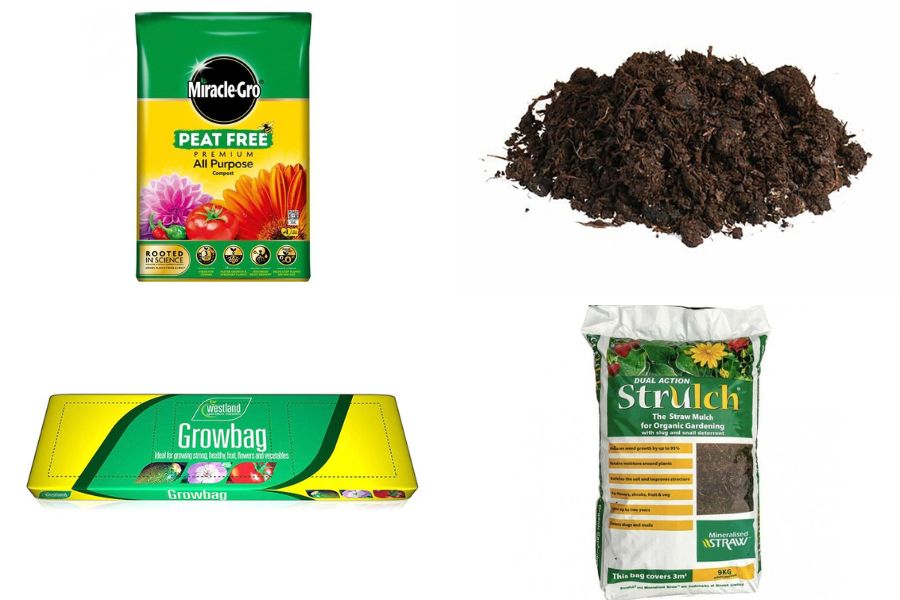
Good compost is essential when growing vegetables in pots. Unlike plants grown in the ground, container-grown vegetables rely entirely on the compost around their roots for water, nutrients and support. For most crops, a high-quality peat-free multipurpose or container compost will provide an excellent start and support healthy growth and productive harvests.
Rather than relying on grow bag compost alone, Jacky recommends improving it with additional organic matter: "I would normally add into my growbag compost some mushroom compost and I then mulch each one with a layer of Strulch."
Adding mushroom compost improves structure and nutrient content, while a layer of Strulch helps retain moisture around the roots. Strulch also acts as a natural slug deterrent and gradually breaks down to improve soil quality over time.
Taking the time to choose the right compost and mulch can make a noticeable difference to the health and productivity of container-grown crops. At Oxford Garden Centre, we stock a wide range of peat-free composts, soils and mulches to help your vegetables get off to the best possible start. Browse the range online or visit us in store for expert advice.
Watering and feeding container-grown vegetables
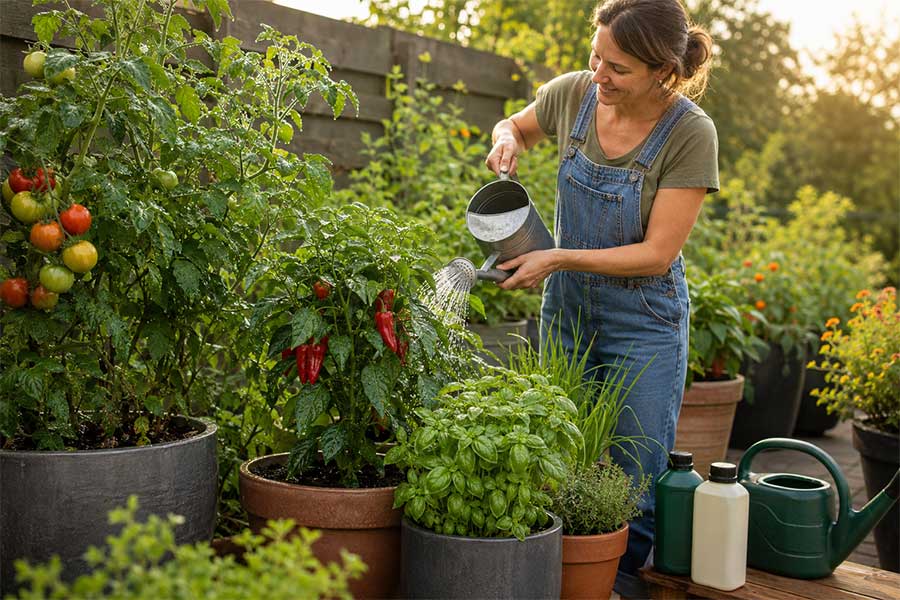
Maintaining consistent moisture levels is key when growing vegetables in pots. Containers dry out much faster than garden borders, particularly during warm weather, and tomatoes, peppers and potatoes are especially thirsty crops.
A few minutes spent watering in the morning or evening can significantly improve plant health and harvests. If you're using a vertical vegetable garden system, make sure thirsty crops are positioned where they can be watered easily.
When it comes to feeding, Jacky recommends using soluble feeds throughout the growing season: "I would suggest Tomorite for toms and peppers, but also a seaweed soluble feed. Alternate the feeds as seaweed also contains other trace elements beneficial to plants. I would suggest adding soluble feed once blossom has faded and fruit is going to form."
Following the instructions on your chosen feed is important, but feeding every couple of weeks is often enough to keep container-grown vegetables productive. Seaweed-based products can also be worked into the compost surface to provide a nutrient boost and support growth.
Everything you need for growing vegetables in pots
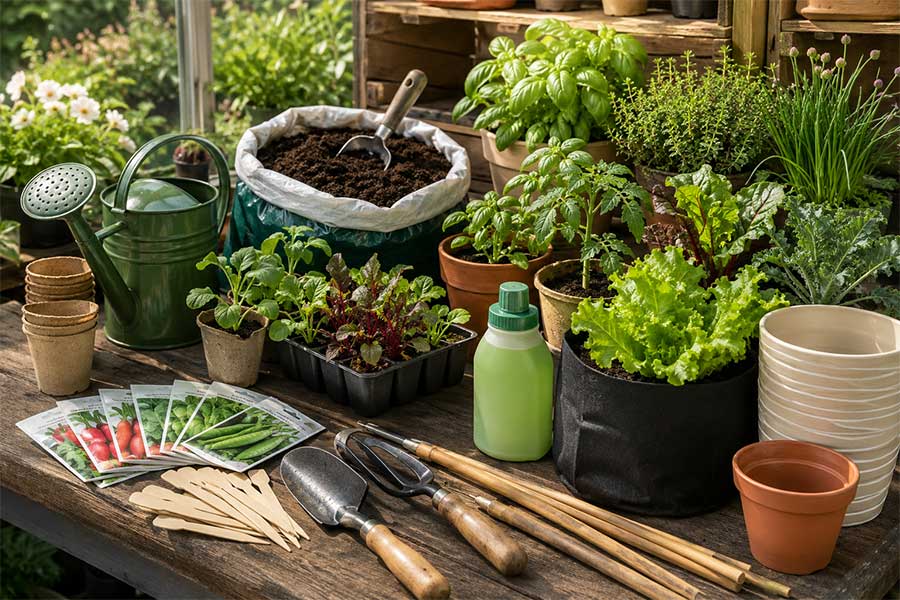
Getting started is often easier than people think. With a few containers, quality compost and the right plants, you'll soon be harvesting fresh vegetables from your own small garden.
Whether you're planning a few pots of herbs or a patio vegetable garden, Oxford Garden Centre has everything you need to get started. From seeds and young plants to peat-free compost, grow bags, planters and feeds, you'll find all the essentials in one place.
We stock a wide range of vegetable seedlings throughout the growing season, with regular deliveries of popular crops such as tomatoes, chillies, peppers, courgettes and cucumbers. Young plants are a great option for beginners, helping you bypass the germination stage and enjoy quicker results. With that said, we also stock various vegetable seeds, with crops such as beetroot, carrots, parsnips and spring onions particularly well suited to direct sowing.
Visit us seven days a week to browse our full in-store range of vegetable seeds and young plants, alongside everything you need for successful container growing. Our knowledgeable team is always on hand to offer advice and help you choose the right products for your space.