
Autumn Lawn Care Guide: Expert Tips for a Healthy Lawn

If your lawn looks a little worse for wear after summer, our autumn lawn care guide will help you to get it looking as good as new! Long dry spells and heavy use through the school holidays can leave grass patchy, tired and in need of attention. The good news is that now is the perfect time to put things right. With cooler weather, more rain and soil that’s still warm, autumn is ideal for repairing damage and strengthening roots before winter sets in. A little effort now will mean a greener, healthier lawn when spring arrives.
At Oxford Garden Centre, we have everything you need to rejuvenate your lawn, from turf and seed to topsoil and chemical treatments. Not sure where to start? Read on for our key autumn lawn care tips to help you repair, feed and protect your lawn for the months ahead.
Topics covered in our autumn lawn care guide
- Why autumn lawn care matters
- Step by step autumn lawn care guide
- Tips for getting your lawn ready for winter
Why autumn lawn care matters
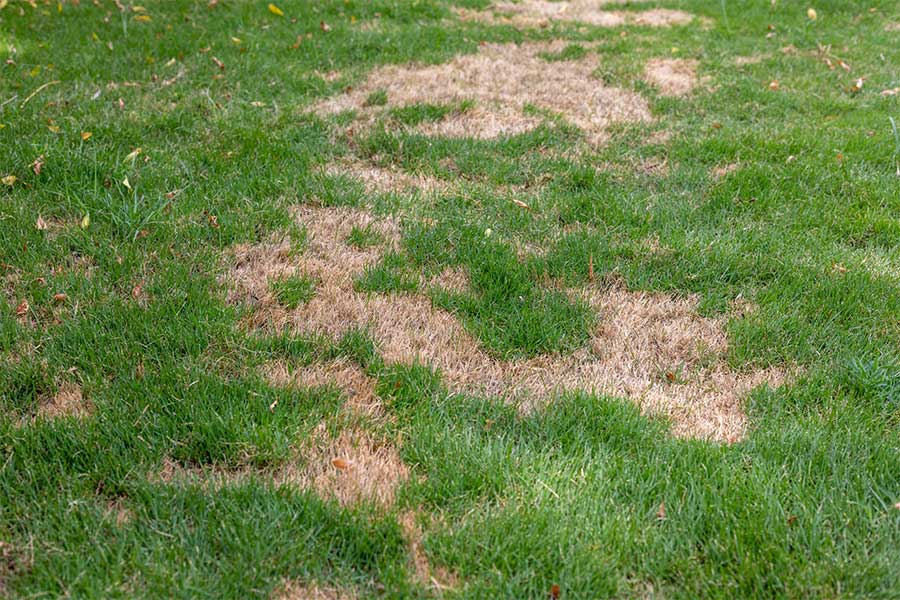
Taking care of your lawn in autumn isn’t just about tidying up after the summer months. It’s the season that sets the tone for how well your grass will fare during the colder months and how quickly it recovers in spring. A little effort now will help you reap the benefits later, including:
- Stronger roots that can withstand frost, rain and cold winds
- Thicker growth that naturally helps crowd out moss and weeds
- Healthier soil through aeration and topdressing
- Fewer problems in spring, with grass bouncing back greener and more resilient
So, what should you be doing now? Let’s break down the essential autumn lawn care jobs…
Step-by-step autumn lawn care routine
Here is a process summary of lawn care jobs to tackle in autumn, we go into more detail about each step, with handy tips and product recommendations, later in this guide.
- Rake up fallen leaves regularly
- Mow less often, leaving grass slightly longer
- Scarify to clear thatch and moss
- Aerate compacted soil to improve drainage
- Apply topdressing to improve soil and level surfaces
- Feed with an autumn fertiliser before rainfall
- Reseed thin or bare areas to thicken growth
- Lay new turf if repair isn’t enough
Clear leaves regularly
The first task for any autumn lawn is dealing with fallen leaves. A scattering here and there won’t do much harm, but a thick carpet can block sunlight, trap moisture and encourage moss growth or fungal disease. Left long enough, it may even kill off the grass beneath.
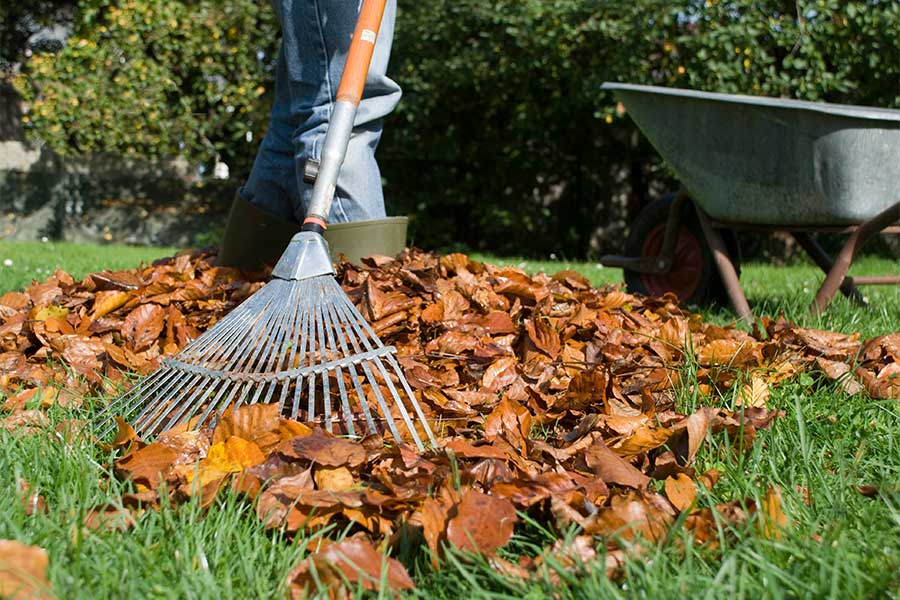
Raking little and often is the best way to prevent this. Collected leaves don’t have to go to waste either – they can be added to the compost heap or stored in bags to break down into leaf mould, which makes a nutrient-rich mulch for borders. Focus on corners, shaded areas and under trees where leaves and damp tend to linger, creating great conditions for moss.
Adjust your mowing routine

While grass continues growing well into autumn, it does so much more slowly than in summer. With that in mind, you’ll still need to mow your lawn – just not as frequently. Every two weeks is typically enough at this time of year. Just make sure the grass is dry and raise the blades on your mower so that it is left around 2.5 to 4cm tall.
Leaving your lawn a little longer will provide insulation against frost and helps crowd out weeds. We’d also recommend collecting the clippings to make sure the surface is free from debris and not at risk of fungal disease. Why not compost the clippings for planting next year?
Scarify to remove thatch and moss
Over the summer, lawns often develop thatch – a dense, spongy layer of dead grass and roots that sits just above the soil surface. By autumn, this layer can be several centimetres thick, blocking air, water and nutrients from reaching the roots. Additionally, the damp conditions of autumn can make lawns more vulnerable to moss. But there’s a solution!
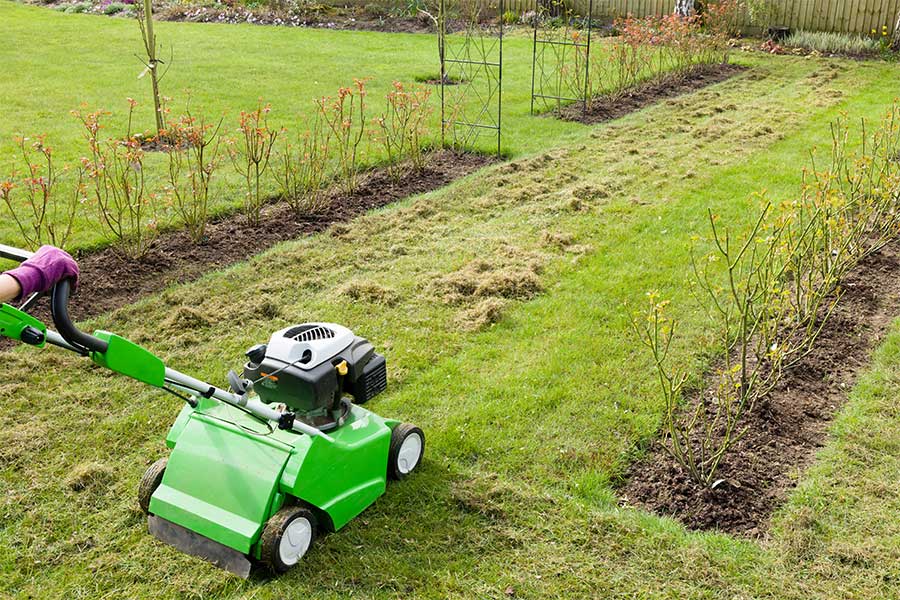
Scarifying your lawn with a spring-tined rake will remove both thatch and moss to restore airflow. You can also get powered scarifiers to save time in larger gardens. Work methodically across the lawn and don’t worry if it looks bare or messy immediately afterwards – this is perfectly normal. The grass will recover and come back stronger in the following weeks.
If a lot of moss has built up, apply a treatment such as Westland Aftercut All in One first to tackle the root cause and make removal easier. Once the moss has died back, rake it out thoroughly and overseed the resulting gaps with fresh grass seed. Westland Gro-Sure Smart Lawn Seed Fast Start offers quick results, while the Shady & Dry Areas mix is ideal for corners where sunlight is limited.
Aerate to relieve compaction
Compaction is another common problem after summer, particularly in areas that get a lot of foot traffic. When soil becomes compressed, the roots can’t spread, drainage slows and your lawn will soon look tired. To resolve this, you can aerate the soil as part of your autumn lawn care routine. This involves creating small holes to loosen the soil, allowing water and nutrients to penetrate more easily.
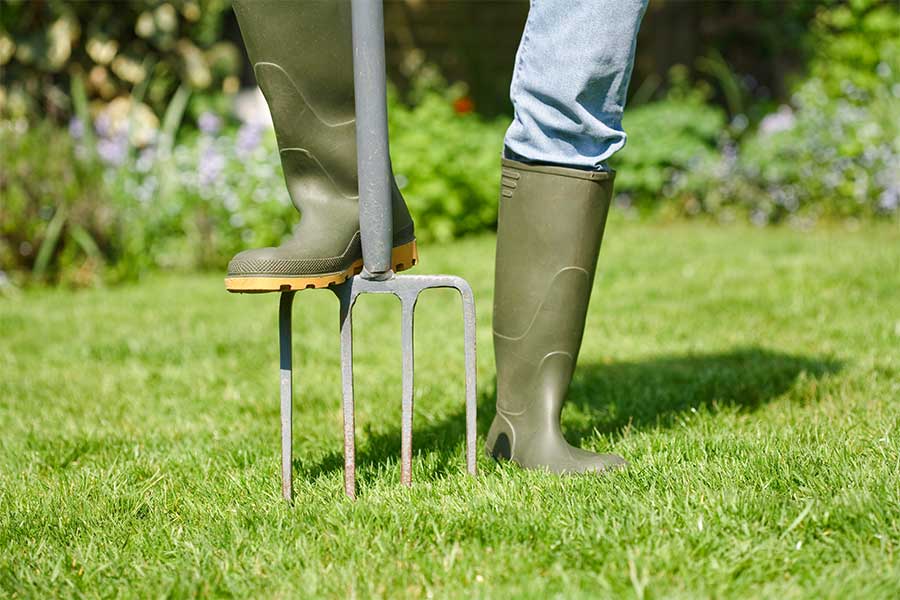
For a smaller garden, a garden fork is sufficient – push the tines about 7–10cm into the ground, spacing the holes roughly 10–15cm apart. For larger lawns, we’d recommend a hollow-tine aerator, which quickly removes plugs of soil to relieve compaction more effectively.
Most lawns only need aerating every two or three years, unless the soil is particularly heavy or the lawn sees a lot of use. Combine with scarifying to promote deeper, stronger root growth.
Improve soil with topdressing
Once aeration is complete, a layer of topdressing is the next step. This is a fine mix of loam, sand and organic matter brushed across the surface of the lawn. It fills the aeration holes, improves soil structure and helps create a level, even finish.
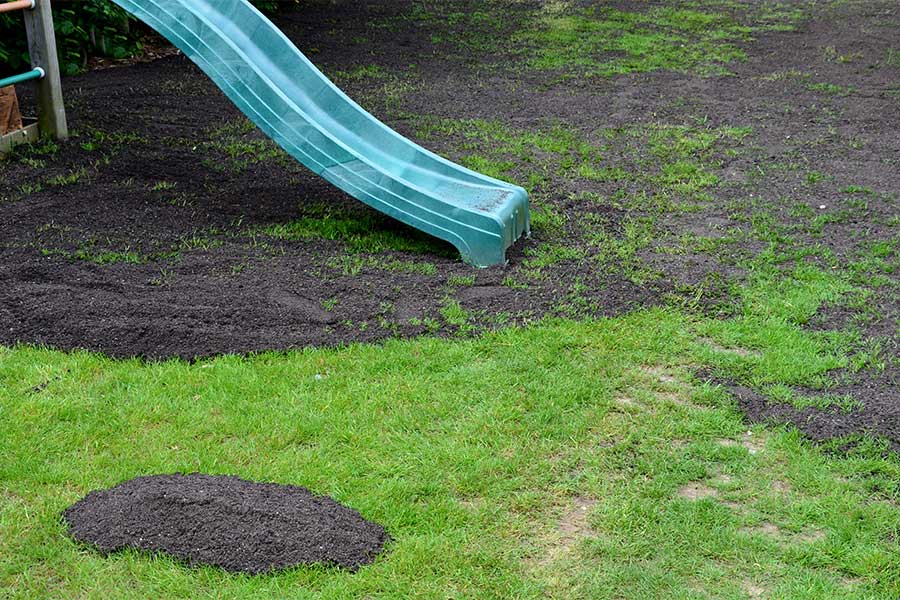
Topdressing also stimulates new growth by encouraging grass to spread sideways and thickening up thin areas. Over time, it also enhances drainage and resilience – especially useful for clay soils that hold onto water.
For best results, use a quality blend such as Rolawn Topdressing, which is sand-based and specifically designed for lawns. Alternatively, our versatile own-brand OGC Blended Loam Topsoil works well for turfing, topdressing, seeding, borders and general landscaping. Both are available in 500L bulk bags, making them convenient for covering larger areas.
Feed with an autumn fertiliser
By the end of summer, lawns are often depleted of nutrients and in need of a boost. Feeding in autumn will help to strengthen grass roots and improve your lawn’s ability to resist frost, disease and waterlogging. However, you’ll need to choose one designed for this time of year, as autumn fertilisers differ from spring or summer feeds.
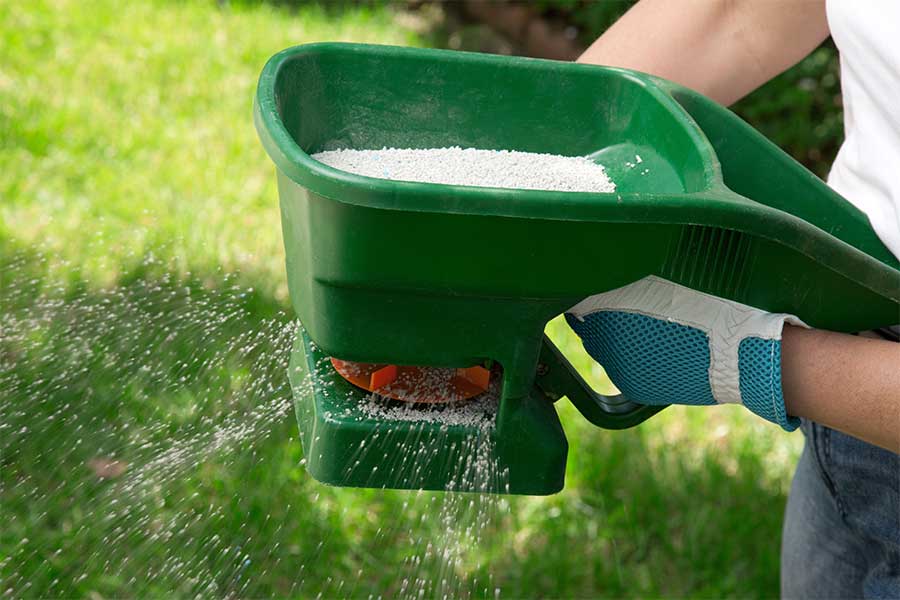
The main difference is that they contain less nitrogen, which means they won’t stimulate soft leafy growth. Instead, they contain more potassium to support root strength and hardiness. Apply fertiliser evenly, ideally just before rainfall so the nutrients are soaked into the soil more quickly. If dry weather is forecast, water it in yourself.
Rolawn GroRight Lawn Establishment Fertiliser is a top pick for new turf or freshly seeded areas, providing a steady release of nutrients as grass establishes. For established lawns, Westland Aftercut All in One will green your lawn quickly while also tackling weeds and moss.
Reseed thin or bare patches
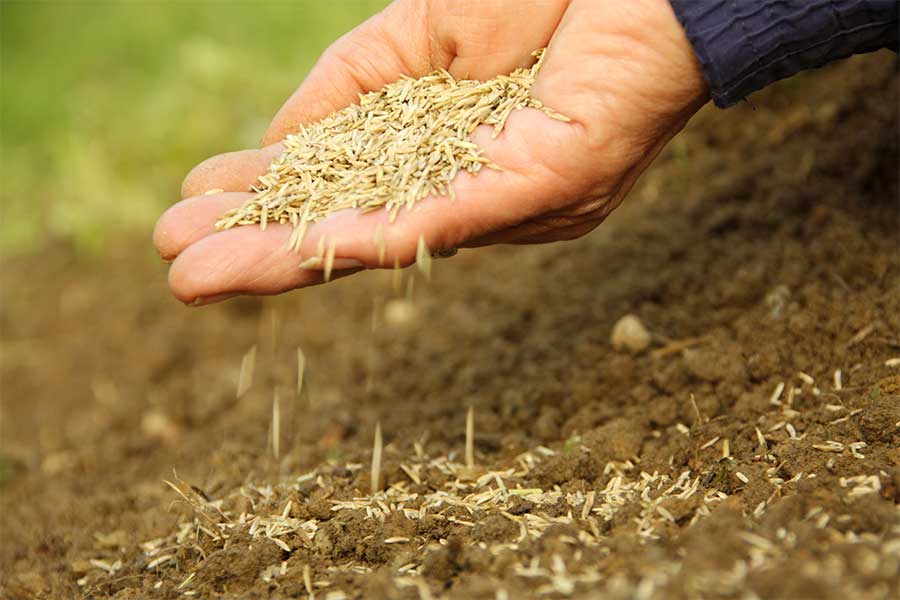
Bare patches not only spoil the look of your lawn, but also create gaps where moss and weeds can take hold. Autumn is the best time to repair them, as the soil is still warm and conditions are moist enough for good germination.
Start by lightly raking or forking the soil to loosen it, then scatter the fresh seed over any bare patches. When you’re done, cover the seed with a thin layer of topdressing to protect it from birds and help lock in moisture. Water gently and keep the soil damp until seedlings appear. Growth usually takes a couple of weeks, though it slows as temperatures fall later in the year.
Rolawn Medallion Premium Lawn Seed is a great all-round option if you want to create a strong, good-looking lawn. For more specific needs, the Westland Gro-Sure Smart Lawn Seed range offers mixes designed for quick growth or for tricky spots such as shady or dry areas.
Consider laying new turf
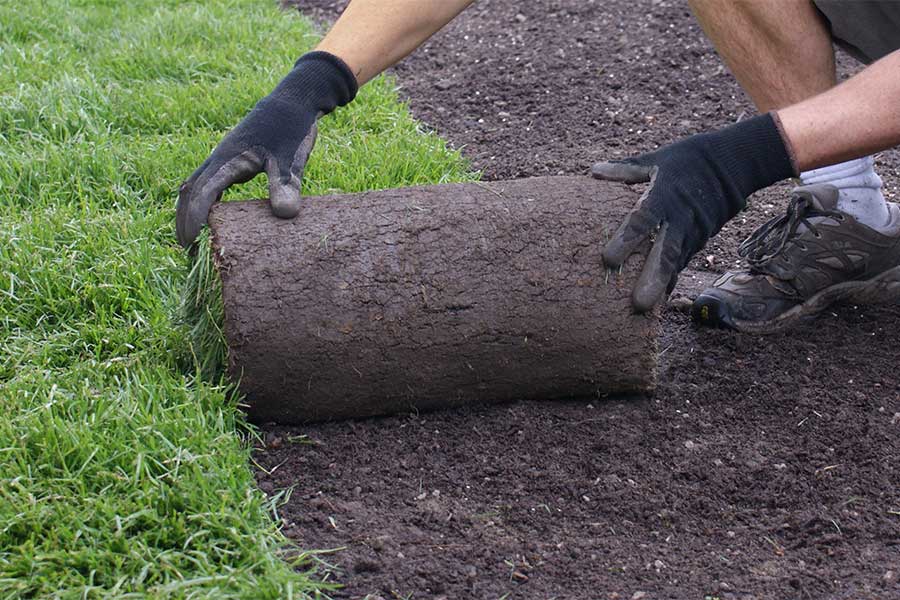
Depending on the extent of the damage, sometimes reseeding isn’t enough and the best option is to replace the lawn altogether. Autumn provides the ideal conditions for laying new turf, with cool weather and regular rain helping roots to establish quickly. Follow the steps below for best results:
- Prep the area by clearing weeds, old turf and debris.
- Next, dig or rotovate the soil to a depth of at least 15cm, then firm the ground by treading lightly and level it with a rake.
- Add a layer of Rolawn Turf & Lawn Seeding Topsoil to create a smooth, fertile base for the new turf.
- Lay the turf in a staggered, brickwork pattern, pressing edges tightly together to avoid gaps.
- Water thoroughly after laying and keep the soil moist until roots are established.
One of our bestsellers is Rolawn Medallion Turf, a blend of fescue and ryegrass that gives you a lawn which looks good, copes well with wear and can even stand up to drier weather conditions. Each roll covers about 1m² and we offer bulk discounts for larger garden projects, ask a member of our team in store for details.
Get your lawn winter-ready
By tackling these jobs in the autumn – from clearing leaves and scarifying to feeding, aerating and patch repair – you’re giving your lawn the best chance to stay healthy through winter. And if reseeding isn’t enough, it’s also great time of year to lay new turf.
At Oxford Garden Centre, we can supply turf and lawn seed through to fertilisers, topsoil and moss treatments by top brands like Rolawn and Westland. Browse our range of lawn care products and garden tools online or pop into the store for friendly advice and supplies to keep your lawn looking its best. We’re open 7 days a week and offer free delivery throughout Oxford with no minimum spend required!